
Search Engine Optimization, commonly known as SEO, is one of the most important strategies in digital marketing. Businesses use SEO to improve their visibility on search engines, attract relevant website visitors, increase brand awareness, generate leads, and support long-term business growth.
When people search for information, products, or services online, search engines such as Google analyze millions of webpages to determine which results are most relevant and useful. SEO helps websites improve their ability to appear for relevant searches.
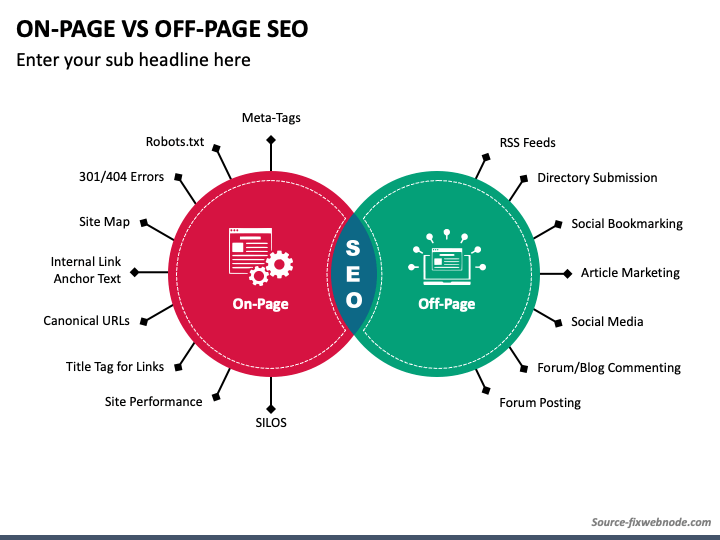
SEO includes many different activities. Two of the most important areas are On-Page SEO and Off-Page SEO.
Although both have the same overall purpose of improving a website’s search performance, they focus on different areas.
On-Page SEO focuses on things you can optimize within your own website.
Off-Page SEO focuses on activities and signals that happen outside your website.
Understanding the difference between these two types of SEO is important for website owners, digital marketers, bloggers, and businesses that want to improve their online presence.
In this article, we will explain On-Page SEO and Off-Page SEO, their differences, important techniques, benefits, examples, common mistakes, and how both strategies can work together.
What Is On-Page SEO?
On-Page SEO is the process of optimizing elements within a webpage to make the content more useful to visitors and easier for search engines to understand.
On-Page SEO is largely under the control of the website owner or content creator.
It includes optimizing:
- Website content
- Keywords
- Title tags
- Meta descriptions
- Headings
- URLs
- Internal links
- Images
- Alt text
- Page structure
- User experience
The main objective is to make every important webpage clear, relevant, useful, and easy to navigate.
For example, if a website publishes a blog about digital marketing, the website owner can optimize the article title, headings, content, images, keywords, and internal links.
These activities are examples of On-Page SEO.
Why Is On-Page SEO Important?
On-Page SEO provides the foundation for a website’s search visibility.
Search engines need to understand what a webpage is about before they can determine when it may be useful to users.
If a page has unclear content, poor structure, or missing important information, search engines and visitors may have difficulty understanding its purpose.
Good On-Page SEO can help:
- Improve content relevance
- Make webpages easier to understand
- Improve website navigation
- Provide a better user experience
- Help search engines discover important content
- Support organic search visibility
The goal should not be to manipulate search engines. Instead, the website should provide genuinely useful content that satisfies the user’s needs.
Important On-Page SEO Techniques
1. Keyword Optimization
Keywords are words and phrases that people use when searching online.
For example, a digital marketing website may target keywords such as:
- Digital marketing services
- SEO services
- Social media marketing
- Content marketing
- Google Ads services
Keyword research helps marketers understand what their target audience is searching for.
Keywords should be used naturally within relevant content.
Using the same keyword excessively can make content difficult to read. This practice is commonly known as keyword stuffing and should be avoided.
2. Title Tag Optimization
A title tag describes the topic of a webpage.
For example:
Digital Marketing Services for Small Businesses
is more descriptive than:
Services
A clear title helps users understand what the page is about and can make search results more useful.
3. Meta Description
A meta description provides a short summary of a webpage.
It can help searchers understand what they will find after clicking a result.
A good meta description should be:
- Clear
- Relevant
- Concise
- Helpful
Although it is not simply a direct ranking factor, a well-written description can help present a page effectively in search results.
4. Heading Structure
Headings divide content into logical sections.
A page can use:
- H1 for the main topic
- H2 for major sections
- H3 for supporting subsections
For example:
H1: Difference Between On-Page SEO and Off-Page SEO
H2: What Is On-Page SEO?
H2: What Is Off-Page SEO?
H2: Key Differences
A logical heading structure makes long-form content easier to read and understand.
5. Internal Linking
Internal links connect one page of a website to another page on the same website.
For example, a blog about On-Page SEO could link to another article about keyword research.
Internal linking can help visitors discover related content and help search engines understand the relationships between pages.
6. Image Optimization
Images can improve a webpage, but they should also be optimized.
Useful image SEO practices include:
- Descriptive file names
- Appropriate alt text
- Compressed image sizes
- Suitable image formats
- Proper dimensions
Optimized images can also contribute to a better user experience and page performance.
7. High-Quality Content
Content is one of the most important parts of On-Page SEO.
Good content should be:
- Useful
- Relevant
- Accurate
- Original
- Well-organized
- Easy to understand
The main purpose of content should be to help the reader.
What Is Off-Page SEO?
Off-Page SEO refers to activities performed outside your own website that can help build authority, reputation, visibility, and recognition.
Unlike On-Page SEO, many Off-Page SEO signals are influenced by other websites, people, publications, and online platforms.
Important Off-Page SEO activities include:
- Backlinks
- Digital PR
- Brand mentions
- Content promotion
- Online reputation
- Relevant partnerships
Off-Page SEO is often associated with link building, but it is broader than backlinks alone.
Why Is Off-Page SEO Important?
Off-Page SEO can help demonstrate that a website is recognized and referenced beyond its own pages.
For example, if relevant and trustworthy websites naturally reference a business’s useful content, those references can contribute to the website’s authority.
Off-Page SEO can help businesses:
- Build online authority
- Increase brand awareness
- Earn referral traffic
- Develop industry relationships
- Increase online visibility
- Support long-term SEO growth
The focus should always be on earning legitimate recognition rather than manipulating rankings.
Important Off-Page SEO Techniques
1. Backlinks
A backlink is a link from another website to your website.
For example, a marketing website might publish an article about SEO and link to your website as a useful resource.
That link is a backlink.
Relevant and trustworthy backlinks can be valuable because they connect your website with other sources on the web.
However, more backlinks do not automatically mean better SEO.
The quality and relevance of links are important.
2. Digital PR
Digital PR involves gaining exposure through online publications, industry websites, interviews, articles, news coverage, and other digital media.
For example, a business may publish original research that gets mentioned by relevant online publications.
This can increase brand visibility and potentially result in useful backlinks.
3. Brand Mentions
A brand mention occurs when a website or online platform refers to a business or brand.
A mention does not necessarily need to contain a link.
Repeated exposure across relevant online sources can help increase awareness of the business.
4. Content Promotion
Creating useful content is only the first step.
Businesses can promote content through appropriate channels such as social media, newsletters, partnerships, and professional communities.
Content promotion can help more people discover useful resources and may lead to natural mentions and links.
5. Online Reputation
A business’s reputation can influence customer trust.
Providing good products or services, responding professionally to customers, maintaining accurate information, and encouraging genuine feedback can help build a stronger online reputation.
Main Difference Between On-Page SEO and Off-Page SEO
The simplest way to remember the difference is:
On-Page SEO = Optimization inside your website
Off-Page SEO = Activities and signals outside your website
However, there are several important differences.
| On-Page SEO | Off-Page SEO |
|---|---|
| Takes place within your website | Takes place outside your website |
| Focuses on content and webpage elements | Focuses on authority and reputation |
| Includes keywords and headings | Includes backlinks and mentions |
| Includes internal linking | Includes external links |
| Website owner has greater control | Often depends on external websites |
| Focuses strongly on relevance and usability | Focuses strongly on authority and recognition |
| Optimizes individual pages | Helps strengthen overall website authority |
On-Page SEO vs Off-Page SEO: Control
One major difference is the level of control.
With On-Page SEO, the website owner can directly make changes.
For example, you can change:
- A page title
- A heading
- A paragraph
- An image
- An internal link
- A URL
- A meta description
With Off-Page SEO, you cannot directly control what other websites do.
You can create valuable content and promote it, but another website decides whether it wants to mention or link to your content.
This makes Off-Page SEO more dependent on building relationships and earning recognition.
On-Page SEO vs Off-Page SEO: Main Purpose
On-Page SEO mainly helps search engines understand the content and purpose of a webpage.
Off-Page SEO mainly helps establish the authority and reputation of a website.
For example, optimizing an article about SEO with clear headings and useful information is On-Page SEO.
Having a relevant industry publication naturally reference that article is an example of Off-Page SEO.
Can On-Page SEO Work Without Off-Page SEO?
Yes, especially for less competitive topics.
A useful, well-optimized page can sometimes rank without having a large number of external links.
However, for competitive topics, authority and external recognition can become more important.
This is why businesses should consider both strategies as part of a complete SEO plan.
Can Off-Page SEO Work Without On-Page SEO?
Off-Page SEO alone is usually not enough.
Imagine that a website receives links from other websites but its content is unclear or unhelpful.
Visitors may arrive but fail to find what they need.
A strong website foundation is therefore important before focusing heavily on authority-building activities.
On-Page SEO helps ensure that visitors who arrive at your website find useful information.
How On-Page and Off-Page SEO Work Together
The best SEO strategy combines both approaches.
Imagine a digital marketing business creates a detailed blog titled:
“Complete Guide to SEO for Beginners.”
First, the business can use On-Page SEO.
It can:
- Research relevant keywords
- Write useful content
- Create a clear title
- Organize the article with headings
- Add internal links
- Optimize images
- Improve page usability
After publishing the article, the business can use Off-Page SEO.
It can:
- Share the article through appropriate social platforms
- Promote it through newsletters
- Build relationships with relevant websites
- Conduct digital PR
- Earn natural mentions
- Gain relevant backlinks
This combination can create a stronger SEO strategy.
Example of On-Page and Off-Page SEO
Consider a small business that wants to attract customers searching for “digital marketing services.”
On-Page SEO
The business creates a dedicated service page.
The page includes:
- A clear title
- Relevant headings
- Useful service information
- Naturally used keywords
- Internal links
- Optimized images
- Clear contact information
- A suitable call to action
These are On-Page SEO activities.
Off-Page SEO
The business then works on building its online presence.
It may:
- Publish valuable industry articles
- Promote useful content
- Earn relevant mentions
- Build professional relationships
- Gain legitimate backlinks
- Participate in appropriate industry discussions
These are Off-Page SEO activities.
Together, these efforts can strengthen the website’s overall SEO strategy.
Common On-Page SEO Mistakes
Understanding common mistakes can help businesses improve their websites.
1. Keyword Stuffing
Using keywords excessively can make content unnatural and difficult to read.
2. Poor Content
Content that provides little useful information may not satisfy users.
3. Poor Heading Structure
Unorganized headings can make long articles difficult to navigate.
4. Missing Internal Links
Important pages may become harder to discover when internal linking is weak.
5. Ignoring User Experience
A page should be designed for people, not just search engines.
Common Off-Page SEO Mistakes
Off-Page SEO should also be handled carefully.
1. Buying Low-Quality Links
Businesses should avoid manipulative link-building schemes.
2. Focusing Only on Quantity
A large number of irrelevant links is not necessarily valuable.
3. Getting Irrelevant Links
Links from unrelated websites may provide little meaningful value.
4. Ignoring Reputation
SEO should include building a trustworthy and positive online presence.
Which Is More Important?
There is no universal answer because On-Page SEO and Off-Page SEO have different purposes.
On-Page SEO is the foundation.
It makes sure your website provides useful content and a clear experience.
Off-Page SEO supports authority and recognition.
A website with excellent content may still face challenges in competitive markets if it has little external recognition.
Similarly, external links cannot compensate for poor content or a poor website experience.
Therefore, both should be part of a balanced strategy.
How to Build a Balanced SEO Strategy
Businesses can follow a simple process.
Step 1: Understand Your Audience
Find out what your target audience needs and what questions they search for.
Step 2: Conduct Keyword Research
Identify relevant keywords and understand their search intent.
Step 3: Optimize Important Pages
Improve titles, headings, content, URLs, internal links, and images.
Step 4: Improve Technical SEO
Make sure important pages can be crawled and indexed and that the website provides a good experience.
Step 5: Create Useful Content
Publish blogs, guides, FAQs, case studies, and other helpful resources.
Step 6: Promote Your Content
Share valuable content through appropriate channels.
Step 7: Build Authority Naturally
Earn relevant mentions and backlinks through useful content, digital PR, and genuine relationships.
Step 8: Monitor Performance
Track useful metrics such as organic traffic, search visibility, clicks, conversions, and other relevant data.
Final Conclusion
On-Page SEO and Off-Page SEO are two essential parts of a complete SEO strategy.
On-Page SEO focuses on everything you optimize within your website, including content, keywords, title tags, headings, URLs, internal links, images, and page structure.
Off-Page SEO focuses on activities outside your website, including backlinks, brand mentions, digital PR, content promotion, and online reputation.
The easiest way to remember the difference is:
On-Page SEO improves the website itself.
Off-Page SEO helps build authority and recognition around the website.
Neither one should be treated as a replacement for the other. A strong SEO strategy starts with a useful, well-structured, technically healthy website and then builds authority through legitimate external recognition.
For businesses, bloggers, and digital marketers, understanding both On-Page and Off-Page SEO is essential for creating a strong online presence.
SEO is a long-term process. It requires research, useful content, technical improvements, consistent optimization, and continuous measurement.
When On-Page SEO and Off-Page SEO work together, businesses have a stronger foundation for attracting relevant organic traffic, building trust, improving online visibility, and achieving sustainable digital growth.